

Technology is advancing at a breathtaking pace, transforming the way we live, work, and interact with the world. Over the past few decades, we have seen innovations that once seemed impossible become part of everyday life—from smartphones and artificial intelligence to smart homes and virtual reality.
But what could the world look like by the year 2050?
Experts believe that the next few decades will bring revolutionary technologies and gadgets that could redefine human civilization. From intelligent robots assisting with daily tasks to futuristic transportation systems and brain-connected devices, the future promises to be more connected, efficient, and astonishing than ever before.
In this article, we explore 10 mind-blowing technology and gadget predictions for 2050 that could dramatically reshape the world.
1. AI-Powered Personal Assistants Everywhere
Artificial intelligence is already transforming industries today, but by 2050, AI could become deeply integrated into everyday life.
Instead of basic digital assistants that answer simple questions, future AI assistants may act as personal life managers. They could schedule your work, manage finances, control home appliances, monitor your health, and even provide emotional support.
These AI assistants might exist in multiple forms, including:
- Smart glasses
- Wearable devices
- Embedded home systems
- AI holographic companions
They could learn from your behavior and anticipate your needs before you even ask.
2. Fully Autonomous Transportation
Transportation technology is expected to undergo a massive transformation by 2050.
Self-driving cars are already being tested today, but in the future, fully autonomous transportation systems could dominate roads worldwide.
Possible developments include:
- Driverless taxis
- AI-controlled buses and trains
- Autonomous delivery drones
- Smart traffic systems that eliminate traffic jams
Cities may implement connected transportation networks, allowing vehicles to communicate with each other to reduce accidents and improve efficiency.
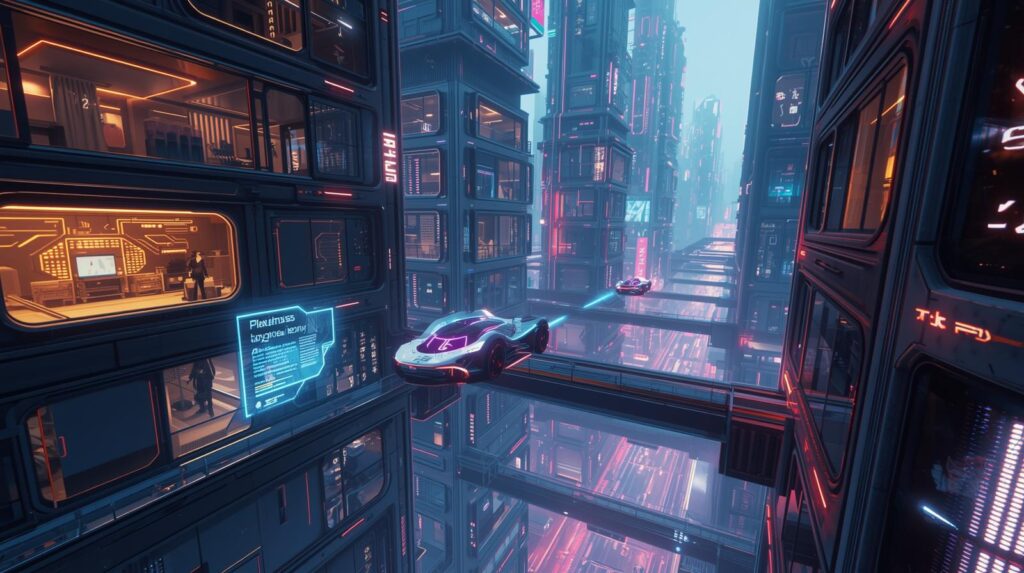
3. Flying Cars Becoming Reality
For decades, flying cars have existed only in science fiction movies. However, many companies are already developing prototypes.
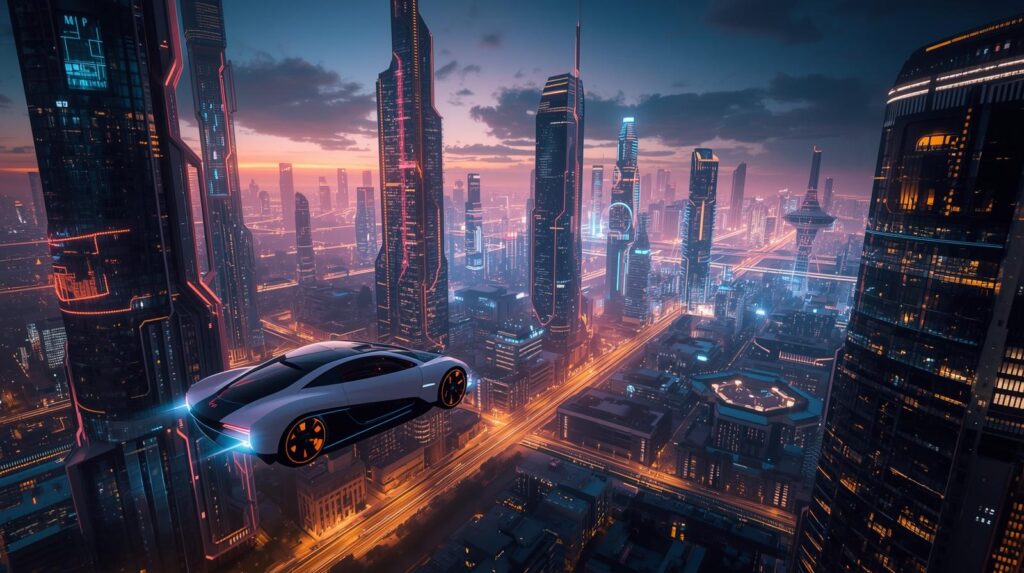
By 2050, flying vehicles may become common in major cities, offering a new way to travel quickly above traffic congestion.
These vehicles could operate through:
- Autonomous flight systems
- Electric propulsion
- Advanced navigation powered by AI
Urban air mobility could revolutionize commuting and logistics, making travel faster and more convenient.
4. Smart Cities Powered by AI
Cities of the future will likely be powered by advanced digital infrastructure.
By 2050, many urban areas could evolve into fully integrated smart cities that use artificial intelligence to optimize resources and services.
Smart city technologies may include:
- AI-managed traffic systems
- Smart waste management
- Intelligent energy grids
- Automated public safety monitoring
- Smart water systems
These innovations could make cities more sustainable, efficient, and environmentally friendly.
5. Brain-Computer Interfaces
One of the most fascinating technological developments expected by 2050 is the rise of brain-computer interfaces (BCIs).
These devices could allow humans to communicate directly with computers using their thoughts.
Potential uses include:
- Controlling gadgets with your mind
- Restoring movement to paralyzed individuals
- Enhancing memory and learning
- Immersive virtual reality experiences
This technology could blur the line between human intelligence and digital systems.
6. Advanced Medical Gadgets and Health Monitoring
Healthcare technology is expected to dramatically improve in the coming decades.
By 2050, wearable gadgets may constantly monitor a person’s health and detect diseases before symptoms even appear.
Future medical technology could include:
- Nano-robots circulating in the bloodstream
- AI diagnostic systems
- Personalized genetic medicine
- Smart implants that monitor body functions
These innovations could help extend human lifespan and improve overall health.
7. Holographic Communication
Video calls may soon feel outdated compared to what the future holds.
By 2050, holographic technology could allow people to communicate through 3D holograms, making it feel as though someone is physically present in the room.
Imagine attending meetings, family gatherings, or even classes through life-size holographic projections.
This could revolutionize:
- Remote work
- Online education
- International communication
- Entertainment and gaming
8. Smart Homes That Think for You
Smart homes already exist today, but the homes of 2050 could be far more intelligent.
Future homes may include AI systems capable of learning daily routines and automatically adjusting the environment.
Examples include:
- Rooms that automatically adjust lighting and temperature
- Kitchens that prepare meals with robotic assistants
- Security systems that recognize faces and behavior
- Appliances that repair themselves
These homes may function almost like living digital ecosystems designed to improve comfort and efficiency.
9. Space Tourism and Space Hotels
Space exploration is advancing rapidly, and commercial space travel could become more accessible by 2050.
Private companies are already working on technologies that could make space tourism a reality.
In the future, people might be able to:
- Take vacations in orbit
- Stay in space hotels
- Experience zero-gravity adventures
- Travel between Earth and lunar stations
While space travel may still be expensive, technological advancements could gradually make it more accessible.
10. Personal Robots in Every Home
Robots are expected to become a major part of everyday life by 2050.
Instead of being limited to factories, robots could become common household assistants capable of performing a wide variety of tasks.
Future personal robots might help with:
- Cleaning
- Cooking
- Elderly care
- Child supervision
- Shopping and errands
With advancements in artificial intelligence and robotics, these machines may interact naturally with humans and understand emotions.
Challenges and Ethical Concerns
While these technologies offer exciting possibilities, they also raise important questions.
Some concerns include:
- Privacy and data security
- Job displacement caused by automation
- Ethical use of artificial intelligence
- Environmental impacts of new technologies
Governments, companies, and societies will need to work together to ensure that future innovations benefit humanity while minimizing risks.
The Future of Technology Beyond 2050
The technologies predicted for 2050 may only be the beginning.
Human innovation continues to push boundaries, and new discoveries could lead to developments we cannot even imagine today.
Future breakthroughs might include:
- Interplanetary travel
- Advanced AI intelligence
- Human-machine integration
- Sustainable energy systems
The world of 2050 will likely be shaped by the creativity, responsibility, and ambition of today’s innovators.
Final Thoughts
The future of technology promises to be extraordinary. From AI-powered gadgets and flying cars to brain-computer interfaces and space tourism, the next few decades could redefine human life.
While many of these predictions may seem like science fiction today, history has shown that technological progress often exceeds expectations.
As we move closer to 2050, one thing is certain: technology will continue to transform our world in ways that inspire wonder and possibility.