

Introduction
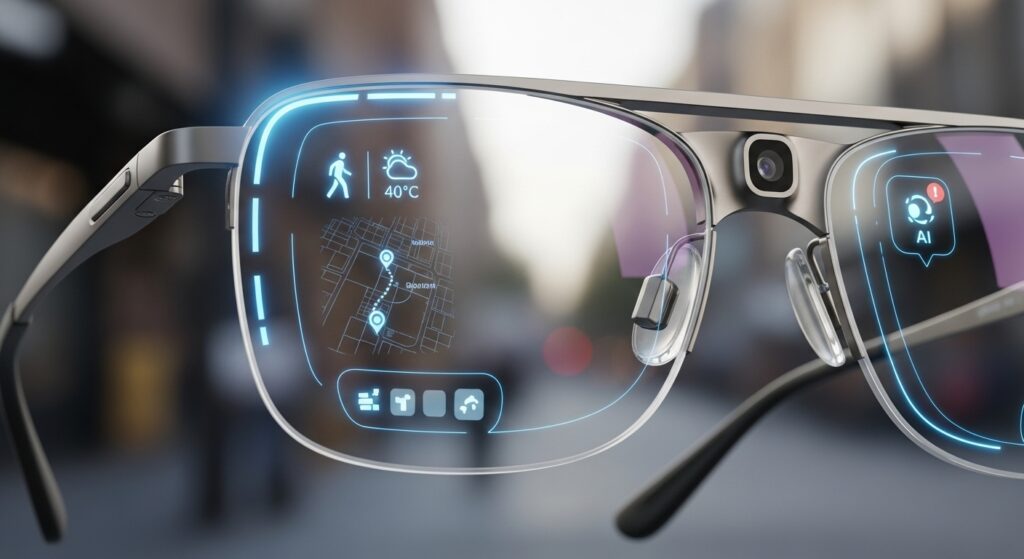
AI smart glasses are no longer futuristic concepts reserved for sci-fi movies—they’re real, evolving fast, and quietly reshaping how we interact with technology. As someone who follows emerging gadgets closely, I’ve noticed that AI-powered smart glasses are finally crossing the line from “interesting prototype” to “practical everyday device.”
Unlike earlier smart glasses that struggled with poor usability and privacy concerns, today’s AI smart glasses combine artificial intelligence, lightweight design, voice control, and real-time data processing. The result? Wearable tech that can assist, inform, translate, navigate, and even record—hands-free.
In this article, I’ll break down how AI smart glasses work, where they shine, where they still fall short, and whether they’re actually worth your attention in 2026. This is not hype—just a clear, balanced look from a JusteQs perspective.
4. SEO-Optimized Headings
H2: What Are AI Powered Smart Glasses?
AI-powered smart glasses are wearable devices that look like regular eyeglasses but include built-in cameras, microphones, sensors, and AI processors. What makes them different from earlier smart glasses is contextual intelligence—they don’t just display information; they understand it.
Using machine learning and computer vision, AI smart glasses can:
- Recognize objects and text
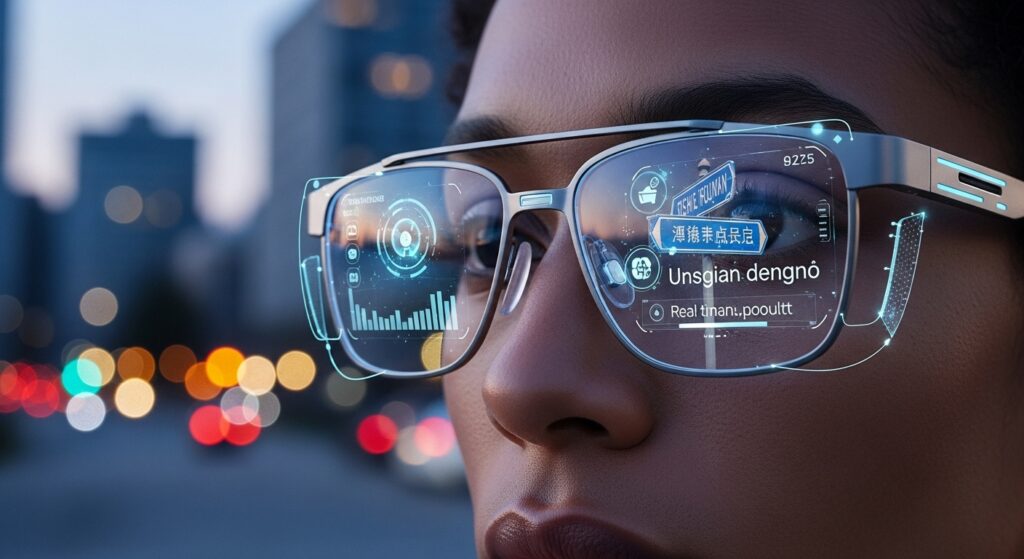
- Translate languages in real time
- Respond to voice commands
- Provide contextual alerts
- Assist with navigation and tasks
From my analysis, the biggest shift is that AI smart glasses are becoming assistive tools, not just display devices.
H2: How AI Smart Glasses Work (Simple Explanation)
H3: Core Hardware Components
Most AI smart glasses include:
- Front-facing camera
- Microphones for voice input
- Bone-conduction or open-ear speakers
- Touch or gesture controls
- Compact battery system
H3: The Role of Artificial Intelligence
The AI layer handles:
- Voice recognition
- Image and object analysis
- Language translation
- Context-aware suggestions
Some processing happens on the device, while heavier tasks are handled via cloud computing. Personally, I think hybrid processing is the best approach—it balances performance and battery life.
H2: Real-World Use Cases of AI Smart Glasses
This is where AI smart glasses start to make sense beyond novelty.
H3: Everyday Productivity
AI smart glasses can:
- Read notifications aloud
- Set reminders via voice
- Provide quick answers without pulling out a phone
For busy professionals or homeowners juggling tasks, this hands-free interaction feels surprisingly natural.
H3: Navigation and Travel
Real-time directions, translated signs, and landmark recognition are becoming standout features. I see huge potential here, especially for travelers and urban commuters.
H3: Accessibility and Assistance
This is one area where JusteQs strongly sees value. AI smart glasses can:
- Read text for visually impaired users
- Identify objects and obstacles
- Provide real-time guidance
This isn’t just cool tech—it’s meaningful innovation.
H2: AI Smart Glasses vs Traditional Smart Glasses
| Feature | AI Smart Glasses | Traditional Smart Glasses |
|---|---|---|
| Intelligence | Context-aware AI | Basic commands |
| Interaction | Voice, gesture, AI prompts | Touch or app-based |
| Use Cases | Productivity, navigation, accessibility | Notifications, media |
| Learning Ability | Improves over time | Static functionality |
From my experience reviewing wearable tech, this leap in intelligence is what finally makes smart glasses practical.
H2: Key Benefits of AI Powered Smart Glasses
Pros
- Hands-free interaction
- Real-time assistance
- Lightweight and improving design
- Accessibility support
- Reduced phone dependency
I especially like how AI smart glasses reduce screen fatigue—something we rarely talk about but all experience.
H2: Limitations and Concerns to Consider
Cons
- Battery life still limited
- Privacy concerns around cameras
- AI accuracy depends on data quality
- Premium pricing for advanced models
- Social acceptance still evolving
From a balanced standpoint, privacy is the biggest challenge. Manufacturers are improving transparency, but it’s something users must remain aware of.
H2: Are AI Smart Glasses Worth It in 2026?
Here’s my honest take.
If you expect AI smart glasses to fully replace your smartphone, you’ll be disappointed. But if you see them as assistive companions, they make a lot of sense.
For:
- Tech enthusiasts → Yes
- Homeowners managing projects → Helpful
- DIY renovators → Surprisingly useful
- Gadget lovers → Absolutely
- Casual users → Maybe, depending on needs
JusteQs believes adoption will grow steadily—not explosively—but meaningfully.
5. Internal Linking Placeholders
- [Internal Link: Best Wearable Tech Devices in 2026]
- [Internal Link: Smart Home Gadgets for Modern Homes]
- [Internal Link: AI Gadgets Changing Daily Life]
6. Data / Comparison Table
| Feature Category | Entry-Level | Mid-Range | Premium |
|---|---|---|---|
| AI Capabilities | Basic voice | Contextual AI | Advanced vision AI |
| Battery Life | 4–6 hrs | 6–8 hrs | 8–10 hrs |
| Camera Quality | Low | Medium | High |
| Price Range | Budget | Moderate | Premium |
7. Pros and Cons Section (Summary)
Pros
- Intelligent, real-time assistance
- Hands-free productivity
- Accessibility benefits
- Growing ecosystem
Cons
- Battery limitations
- Privacy concerns
- Learning curve
- Cost barrier
9. Conclusion with Key Takeaway
AI-powered smart glasses represent one of the most practical applications of artificial intelligence in consumer tech today. They’re not perfect, and they’re not for everyone—but they’re improving fast.
My key takeaway is simple: AI smart glasses are no longer about showing information—they’re about understanding context and assisting intelligently. As the technology matures, I expect them to become as common as smartwatches.
For JusteQs readers, this is a space worth watching closely.

8. Image Ideas with SEO Alt-Text
- Image: Person using AI smart glasses outdoors
Alt text: AI smart glasses providing real-time navigation assistance - Image: Smart glasses interface display
Alt text: AI powered smart glasses showing contextual information - Image: Smart glasses on desk with phone
Alt text: AI smart glasses as wearable technology companion
10. FAQ Section (People Also Ask)
Q1: What are AI smart glasses used for?
AI smart glasses are used for hands-free assistance, navigation, translation, accessibility support, and productivity tasks.
Q2: Do AI smart glasses need the internet?
Some features work offline, but advanced AI functions often require an internet connection.
Q3: Are AI smart glasses safe to use?
Yes, when used responsibly. Privacy settings and awareness are important considerations.
Q4: Can AI smart glasses replace smartphones?
No. They complement smartphones rather than replace them.
Q5: Who should buy AI powered smart glasses?
Tech enthusiasts, professionals, homeowners, and users seeking hands-free assistance benefit the most.
Short Social Media Snippet
Facebook:
AI smart glasses are evolving fast—from sci-fi ideas to practical everyday tech. Here’s my deep dive into how AI-powered smart glasses really work and who they’re for.
X (Twitter):
AI smart glasses aren’t hype anymore. They’re becoming real, useful, and surprisingly practical. Here’s my honest breakdown