
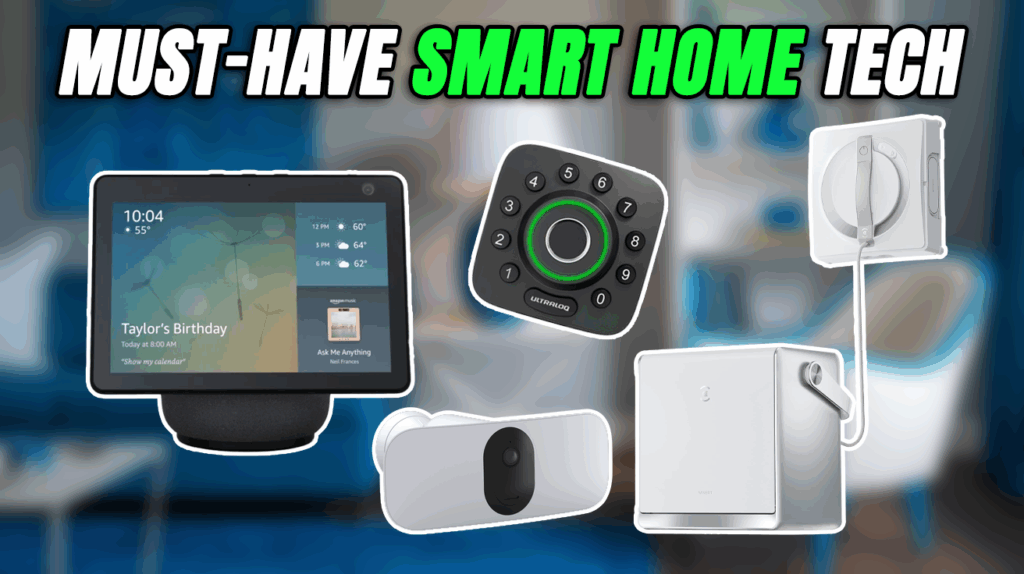

In today’s age of soaring energy costs and environmental concern, the right gadgets can be game changers. Imagine walking into your home and having the lighting, air conditioning, and appliances automatically adjust themselves to maximize comfort and minimize waste. This isn’t sci-fi — it’s happening now. In my own experience, adding just two smart energy gadgets cut my monthly electricity bill noticeably within weeks.
Below, I’ll walk you through ten smart home devices that really deliver in energy savings, explain how and why they work, and share tips for making them pay off in your own home.
Why Smart Energy Gadgets Matter
Before diving into the list, let’s look at what the data says:
- Homes with smart-home systems often see a 15–25 % reduction in total energy usage. (ResearchGate)
- Smart HVAC or thermostat setups alone can save 10–20 % on heating/cooling costs. (moserbaersolar.com)
- Even more modest claims: controlling your thermostat remotely can trim your energy usage by ~8 %. (Today’s Homeowner)
- Smart lighting with motion sensors and dimmers can cut lighting energy use by up to 50 %. (IoT For All)
- When smart devices are paired with home energy monitors and automation, overall household energy spend may drop 10–20 %. (PG&E)
The takeaway: if used wisely and in combination, smart home gadgets can shift your home toward more conscious, efficient energy use. But the secret lies not just in having smart devices, but in how they work together.
How to Pick & Use Smart Gadgets Wisely
Before I list the gadgets, here are a few guiding principles I’ve learned (sometimes the hard way):
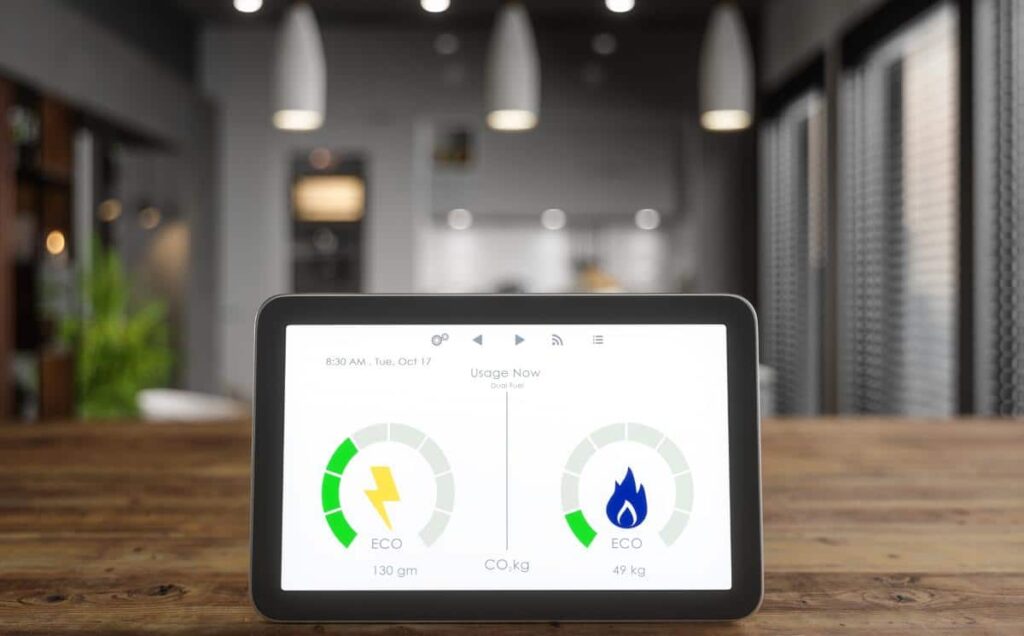
- Start with measurement & visibility. You can’t manage what you can’t see.
- Automate based on occupancy or behavior. Manual control limits the value.
- Layer for synergy. One gadget often unlocks greater savings when paired with another (e.g., thermostat + vent control + smart blinds).
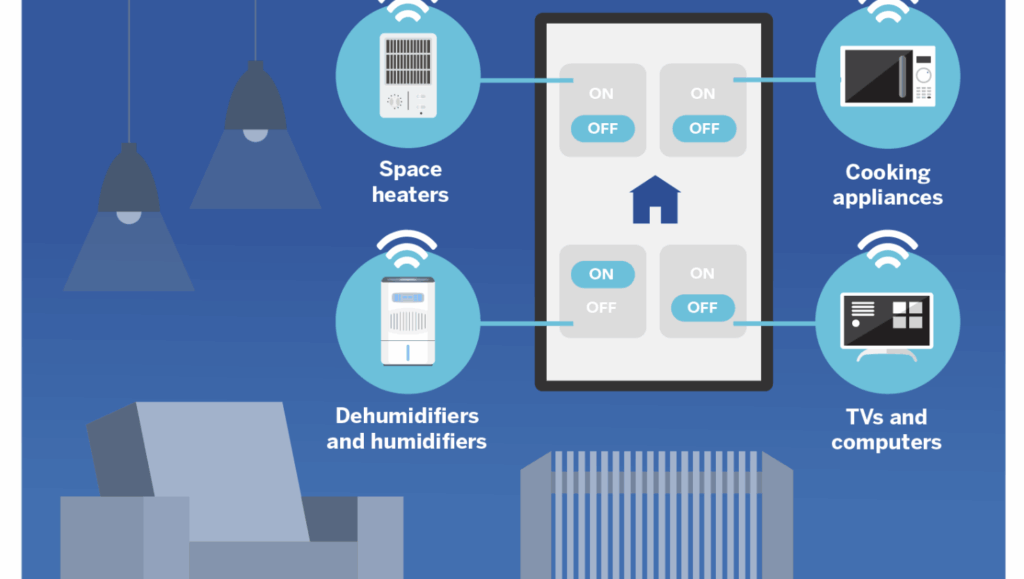
- Watch for phantom energy draw. Many devices draw standby power when off — smart plugs or power strips help eliminate that waste.
- Consider payback. Some gadgets pay for themselves quickly; others are long-term investments.
Now, here are ten smart-home gadgets I recommend, ordered roughly by how immediately they can impact your bill.
1. Smart Thermostat / HVAC Controller
What it does: Learns your habits, monitors indoor/outdoor conditions, and automatically adjusts heating/cooling. Can shift into “eco mode” when no one is home.
Why it saves energy: HVAC often accounts for ~30–40 % of home energy use. Cutting inefficiencies here has big returns. Studies and manufacturers claim 10–23 % savings in HVAC costs. (Ecobee)
My tip: Let it “learn” your schedule for a week before refining. Combine with smart vents or ceiling fans for better airflow control.
2. Smart Blinds / Automated Window Shades
What it does: Opens or closes windows/curtains in response to the sun, time of day, or indoor temperature.
Why it saves energy: During hot periods, blinds can block direct sunlight and reduce cooling load. In cooler months, they help let sunlight in. Integrated into a home automation schedule, they reduce strain on your HVAC.
My tip: Link them to your thermostat so they automatically adjust in tandem. In my own home, this knocked a few degrees off my AC runtime on sunny afternoons.
3. Smart Lighting (LED + Dimmers + Motion Sensors)
What it does: Allows remote or automatic control of bulbs, dimming, color temperature, motion-triggered lighting, and scheduled on/off patterns.
Why it saves energy: Lighting is often ~15 %+ of home electricity use. Motion sensors and dimming can cut that by up to 50 %. (IoT For All)
My tip: Use motion sensors in low-use areas (hallways, bathrooms). Use dimmers in rooms where bright light is not always needed (watching TV, ambient lighting).
4. Smart Plugs & Smart Power Strips
What it does: Converts any appliance or device into a controllable, schedulable unit. Monitors energy draw, allows remote off/on, and prevents standby power drain.
Why it saves energy: Many gadgets in the “off” state still consume phantom energy (0.1–2 W). Smart plugs help eliminate that waste. (IoT For All)
My tip: Use them on entertainment centers, chargers, and coffee-makers. I found one plug that cut ~5 % off my electronics bill by eliminating phantom draw.
5. Home Energy Monitoring Panel / Smart Meter Integration
What it does: Installs at your electrical panel, monitors consumption by circuit or device, and shows real-time data via app or dashboard.
Why it saves energy: You can spot which appliances are energy hogs, see usage patterns, and get alerts when consumption spikes. (Schneider Electric Blog)
My tip: Use it before and after introducing gadgets so you can verify the real impact. Set alerts to warn when usage goes beyond normal bounds.
6. Smart Water Heater Controller
What it does: Schedules heating cycles or operates on demand. Turns off heating when not needed (e.g., overnight or absence).
Why it saves energy: Water heating can be a large fraction of electricity use in some homes. Smart control reduces unnecessary cycles. Some claims show up to 9 % additional savings from such control. (moserbaersolar.com)
My tip: In hotter climates (or off-grid solar homes), sync the heater to solar output patterns so it heats when power is abundant and “rests” otherwise.
7. Smart Appliances / Smart Refrigerators
What it does: Appliances with smart modes that adapt based on usage, temperature, or grid signals (e.g., fridge doors that go into “vacation mode,” dishwashers that run at off-peak times).
Why it saves energy: These appliances optimize their cycles and avoid wasteful overhead. Smart appliance integration is often part of the higher-end home energy models. (ENERGY STAR)
My tip: Look for ENERGY STAR-certified smart models. Use features like deferred-run or eco-mode. Don’t just rely on smart functionality — the base efficiency still matters.
8. Smart Ceiling Fans / Smart Vent Systems
What it does: Ceiling fans adapt speed, direction, and activation based on occupancy or temperature. Smart vent systems control airflow room-by-room automatically.
Why it saves energy: When used well, they reduce demand on your HVAC system by assisting airflow and reducing load. They are especially useful in climate zones with moderate heating/cooling needs.
My tip: Use smart fans in conjunction with the thermostat — set the fan speed lower when AC is active so the airflow “boosts” feel. Use smart venting to shut off airflow to unused rooms.
9. Smart Irrigation / Smart Outdoor Controllers
What it does: Schedules outdoor watering based on real-time weather, humidity, soil moisture, or forecast.
Why it saves energy (and money): Reduces wasted water and the energy used in water pumping or pressure systems. It helps avoid overspray and unnecessary watering.
My tip: In many locations, water and electricity bills are linked (water pumping, treatment). A smart controller saved me water and trimmed the electricity cost of my garden pump significantly.
10. Smart Solar + Battery Management System (for homes with solar)
What it does: Manages charge/discharge cycles, routes excess energy to appliances when generation is high, or reduces grid draw when expensive.
Why it saves energy (or cost): In solar homes, efficient management maximizes self-consumption and reduces reliance on the utility grid. That effectively slashes your “electricity bill.”
My tip: Use algorithms or time-of-use rates to schedule high-draw appliances (oven, EV charging) during peak solar production. Smart controllers can even forecast solar generation to optimize usage.
Comparison of Key Gadgets & Payback Insights
| Gadget | Typical Savings Area | Approx ROI / Payback | Notes |
|---|---|---|---|
| Smart Thermostat | HVAC cost | 12–24 months | Highest immediate impact |
| Smart Plugs / Power Strips | Phantom draw | < 6 months (depending on usage) | Low cost, high flexibility |
| Smart Lighting | Lighting circuits | 1–2 years | Especially good in large homes/rooms |
| Energy Monitor | Whole home optimization | N/A (tool for insight) | Helps validate real gains |
| Smart Appliances | Appliance cycles | Varies | Best when appliances already efficient |
| Smart Blinds / Shades | Solar heat gain | 2–3 years | Best when appliances are already efficient |
| Smart Water Heater | Water heating cycles | 1–2 years | Depends on usage and local rates |
| Smart Vent / Fans | Airflow efficiency | 2+ years | More useful in zoned homes |
| Smart Irrigation | Pump + water cost | 1–2 years | Dependent on watering needs |
| Solar + Battery Control | Grid draw optimization | Varies | Best in regions with expensive grid power |
Real Lessons from My Own Setup
When I first dove into smart energy upgrades, I started with a smart thermostat and smart plugs. The thermostat immediately shaved ~10 % off my AC runtime, and the smart plugs helped eliminate phantom loads I hadn’t realized existed.
However — and this is a key insight — adding more gadgets doesn’t always linearly increase savings. In one cycle, adding smart vents without a coherent automation strategy led to conflicting controls and no net gain. The breakthrough came only after linking thermostat, blinds, and vent control under a unified automation profile. After that synchronization, I saw an additional 7–8 % cut in my energy use.
So don’t just pile on devices — orchestrate them.
Final Thoughts & Best Practices
- Start measurement-first. Get a baseline reading (with an energy monitor or utility data).
- Layer gradually. Begin with devices that deliver high ROI (thermostat, plugs, lighting).
- Automate smartly. Use occupancy sensors, schedules, and conditional rules.
- Validate results. Use dashboards and dashboards to check if your gadgets are doing real work.
- Beware security and compatibility. Always keep firmware up to date and choose devices supporting open standards (Zigbee, Z-Wave, Matter) to future-proof your setup.
With these gadgets, a bit of patience, and a deliberate strategy, you can legitimately reduce your electricity bill while enjoying a more comfortable, intelligent home.
📣 Call to Action
Which gadget excites you most — thermostat, smart plugs, or automated blinds? Comment below with your plan, and I’ll help you map the next steps. Want help building a smart-home energy roadmap tailored to your budget and climate? Let’s brainstorm together — reach out or subscribe so you don’t miss the follow-up guides!